Saturday, August 02, 2014

iWatch and a ripe market

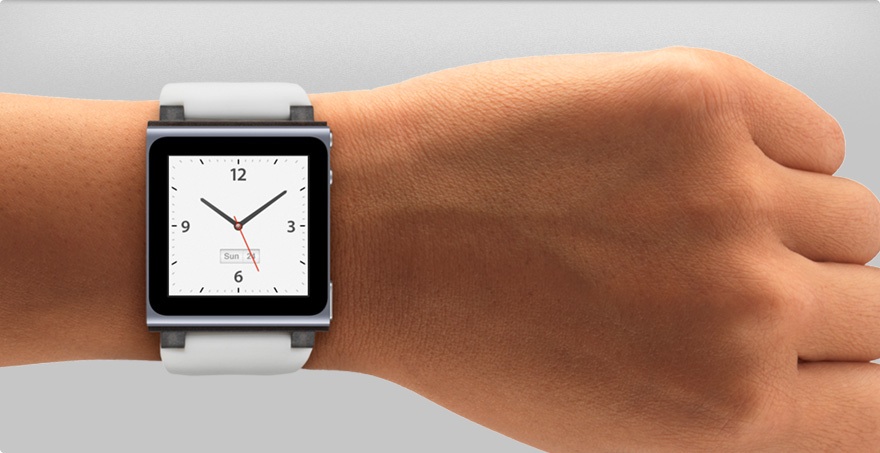
Apple under Tim Cook is making all the right marketing decisions for launching its iWatch product. Shrouding their products in secrecy until the release has been a very successful strategy. The templates and dummies that leak through its suppliers act as an effective advertisement kindling the curiosity among its consumers, youth and the gadget savvy.


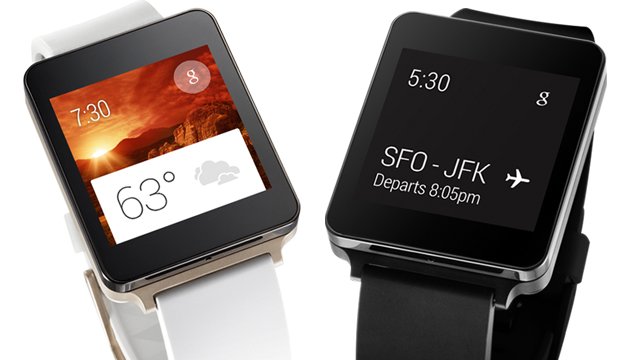
Typical of the android ecosystem, a lot of players wanted to be the first in bringing out consumer facing wearable technology. LG G watch, Moto 360, Samsung Galaxy watch to name a few. What is common among all these devices is a lack of sense in design and usability. None of these are awe-inspiring enough to become a mass sensation. Albeit, they have managed to condition the market about wearable devices and when Apple rolls out its device, the market is already ripe and eager.


Apple has a unique advantage by not being the first player - Business Intelligence! By reading the market's reaction to Google Glass and these wearable tech, Apple can continuously refine and evolve its design and software features. Another area that it should foray is the biometric/fitness sensors industry. But more about this later.


In my opinion, Apple's iWatch has the potential to become a rolling hit among women if it has the following features.
  • Industry leading battery life and easy charging facility. This is easy for Apple given their achievements with iPod nano and similar devices. The last thing you want to do is to charge a watch! Wearable devices should take care of it themselves (Casio has a line of watches that charge through solar cells).
  • Lets talk hardware design. The watch could possibly come in various shapes, but I prefer the traditional round face with distinct straps. The watch can add further customization through software skins.
  • Biometric sensors - Including fitness sensors to monitor walking, running and sleep is a must. What can make a difference is making the watch waterproof and providing the ability to monitor swimming! Additions like heart-rate monitor will complete it. Fitness sensing is the next biggest industry and an avenue for big-data analysis!
  • Tether range. Unlike men, women do not prefer to carry their phones in their jeans pockets, more so when newer iPhones come out in bigger sizes. Further it is a hassle to carry phones in hand. Hence phones are best stored in backpacks or handbags and tether range should be comparable to a wifi signal from a normal router - able to penetrate walls in 3 dimensions. This way, users can stove away the phones in bags with confidence they would not miss calls or messages.
  • Now lets talk software. Apple cannot go wrong with hardware. But software is a beast and its minimalist motto might actually be to its benefit. The watch should be fully customizable through iPhone or iTunes. Some of the features it must have are
    • Displaying time. Please, let the watch do its primary objective. Like the iPhone, time should get updated automatically when you fly across time zones and support displaying multiple time zones.
    • Easy to use timer, alarm, stopwatch features. Dedicated hardware buttons or even better, tap gestures might do the trick.
    • Notifications - subject lines of emails, SMS and push notifications could be briefly displayed. The user can then decide whether to pull the phone out and read the rest.
    • Calls - this is essential, the ability to know the caller and reject the calls. Accepting the calls can perhaps turn the phone to speaker mode
    • Siri - I am not sure how much the market uses voice actions. The most common way I use it it to send SMS to my wife that I am starting somewhere or to call her when my hands are busy. Integrating Siri interaction might be a good add on.
    • Passbook and flight notifications - integrating flight notifications and passbook features would be terrific. This is an avenue where Apple can equal or surpass the abilities of Google Now
    • Navigation - its funny to talk about displaying maps on a tiny screen, but believe me, this is big business. Displaying geocaching like instructions on a simple to read interface that does not require map interaction is hard to achieve, but a game changer once done.
    • App based notifications - this is my favorite topic. Imagine providing a particular app the right to display notifications on your watch for a limited time. This could be any app, say a stock market app that gets dedicated screen space on your phone to push updates.. or a sports app with which you can stay on top of the score without having to pull your phone out, unlock it and fire the app!
    • Emergency - It always pays to plan for the worst. A reliable, false positive proof way of making 911 calls, sending coordinates and notifying dedicated emergency contacts is essential. I would really want to see this.
    • Behavior monitoring - fitness trackers like Jawbone Up, MisFit etc are making forays into this arena. Imagine the ability to set up physical activity goals and your watch gently nudging and reminding you to get up and go for a walk or drink a cup of water or cut down that coffee you just grabbed! At the end of a week or month, you can assimilate all the data, chart them and put it into perspective. Studies are coming out where doctors handed out fitness trackers to patients and self-monitoring has encouraged them to get to a fitter lifestyle.
    • One last thing is an interface to skipping and repeating music.
In summary, the market for wearable devices is ready. The challenge lies in making the device non intrusive, casual looking and getting the software right without bugging the user with numerous settings and complex UI interactions.

Sunday, June 22, 2014

Why Kochadaiiyaan is not an anachronism


My wife and I, along with a couple of friends managed to watch the last screening of Kochadaiiyaan near Los Angeles. We were the only occupants in the theatre and it felt like we had an exclusive screening of the movie.

As I left the movie, I had the feeling that Kochadaiiyaan has left an eternal sensation in my heart. I grew fond of the movie when we watched the director, Aishwarya's speech during the music release festival of the movie, much ahead of the actual movie release. (Yes that is correct, Rajinikanth's movie releases are indeed festivals for the Tamil folks). Unlike a typical celebrity figure, she spoke with cogency, clarity and a higher degree of delivery - something that resembled a keynote speech in a technical conference! I realized we are getting ready for a new breed of entertainers.

I feel Kochadaiiyaan's timing cannot be more perfect! CGI and motion capture technology is put together for a great purpose. Life is short, art is long. Actors, despite their surreal stunts, are humans and Tamil cinema is at a state where its prime actors are retiring to old age. Rajnikanth and other actors in this movie are so unique that they are true gifts to the Tamil speaking populace and this movie has used this amazing new technology to capture them while they are still acting. For an actor, the non-verbal cues like micro expressions, dialog delivery with voice modulation require several years of practice compared to stunts and dance movements. A movie like this, can use such refined delivery from an experienced actor and merge that with the physical stunt movements of a stunt actor to create a truly engaging thriller.

This movie has a story-line that is perfect for Rajni and Rajni could not have acted the way he did, if it were not to be an animation film. Kochadaiiyaan is the perfect candidate for Indian cinema's 100th year celebrations!

People cannot help compare this movie with Avatar, the benchmark for CGI and motion capture tech. Well, for a first time director and for being the first ever movie from India to be capture with this technology, I am very impressed.

Saturday, February 23, 2013

How to buy a new car in the US


Deciding to buy a car is a big decision in most people’s life. In this article I am going to outline some tips that will help make the process easier. If you are in the market for a used car, please read this article I wrote a couple of years back ‘Buying a used car in the US’. I would not consider myself a car expert, but I am a savvy buyer and a car enthusiast who wants to spend his earnings wisely.

Why would one buy a new car?
Seriously, why would you, given that cars depreciate the moment you own them. Well, if you are looking for owning a car for considerable length of time, say over 5 years, it would be better to buy a new car than to get a certified pre-owned or an expensive relatively new used car. New cars come with untouched company warranty with which comes peace of mind and confidence that you can take it anywhere without doubting its safety and reliability.

Alright, where to start?
If you are not an impulse buyer, then car buying can be stressful. This is especially true if you are targeting the midsize sedan segment, which is the most crowded segment. The good side is you get ample options to suit everyone’s taste.

Knowing your budget would be the first step. For most buyers, your spending power is going to determine which car you can buy without feeling a pinch in your monthly payment. Car websites like www.kbb.com, www.edmunds.com, www.cars.com have useful tools that we will use throughout this article. Use the APR calculator, cost to own calculators and get to know your budget. Most banks would loan you for APRs starting from 2.99% and if you plan right, you can buy the car with 0% APR from the manufacturer’s finance division.

Chart a timeline for your purchase. If you worked full time and could only dedicate weekends for car searching, it could take as much as a month to buy that car for that best deal available.
Try to arrive at an early idea of which type of cars you want to buy – sedan / coupe / minivan / SUV. Name those makes that you like. Run an early screening process and rule out those models that you would never consider buying. After this elimination process, list those makes that you want to proceed with.

How to shortlist?
Never buy a car without test driving it. But you cannot test drive every other car in the market. So start shortlisting the cars from the list you made. Use the websites listed above to compare features, boot size, fuel efficiency etc. Make a note of those features that you like in your present car, those that you think are essential in your next car and screen out the models. With too many options, elimination is the best method to screen out cars in the family sedan segment. You can also search for video reviews online in sites like YouTube. There you can see the can in different angles and hear expert reviews about the pros and cons.
Try to arrive at 3 to 5 makes/models. Within the models use the company website to look for trims and the MSRP. At this step it is easier to get overwhelmed and lose track. Just look for those features that you cannot drive without and those that you think you would use in your everyday driving. Also wisely look for those features other drivers of your car, like your spouse or children, would benefit from.
After you had narrowed down, use those websites mentioned above to get the list of dealerships within say 50 miles from your ZIP. Fill your email and contact details (phone # optional) and request for a free quote. These days, customers can easily shop around and dealerships knowing this, present their best offers online. Use this information to call the internet managers and make appointments for a test drive and to talk the deal in person.

At the dealership
Car dealers are some of the best salesmen and can read your body language well. So a little bit of preparation will come in handy. Dress well, really, groom yourself like you would for a date. Once you arrive, ask for the internet manager who first offered you the deal.
I would suggest you pick a small or medium sized dealer that is in your locality when you are test driving a particular model for the first time. Large dealers usually have the best deal and it is strategically benefitting if you did not test drive at a bigger dealership, we will get to this in a minute. New cars would drive the same no matter at which dealership you drive and choosing one that is in your area will allow you to drive it on rough roads that you already know off to get a better idea of how it handles.
At the dealership, maintain a poker face. Try not to be overly enthusiastic and if you did not like something in the car, be vocal about it. When you are a tough customer to please, the dealer has to provide his best deals, offers to convince you.

Ask for the particular trim of the car that you are interested in when you test drive. Checkout all the features that you like in it. Do this at the first dealership, when you get to other dealerships for the same make / model, you can skip the details and get straight to the numbers. This saves you time, but most importantly conveys the message that you are a savvy buyer who is looking for the best deal. The dealer is more likely to realize that you are a potential buyer and will offer his best deal.
Try test driving competing models in your list back to back on the same day or subsequent days. This allows you to compare them easily. Once you like a particular model, sleep over your thought to see if you feel the same way the next day. Do this process for all the models in your list and identify the car that you really want to buy. Make use of the websites listed above to read expert and customer reviews, reliability stats of previous year models etc.

Getting the best deal
Generally larger dealers have the best deals. This is because they seek profit in bulk sales unlike smaller dealerships. But you do not want to head there right away and test drive like a new buyer. If you did so, you are less likely to get the best deal. Hence like mentioned before, test drive your car of choice sufficiently at other dealerships. At the big dealer (who has most likely given you the best rate online so far) meet the finance manager or chief sales manager who has the power to finalize the deal. Refuse to test drive the car and say that you want to speak the numbers. Tell that you are there to buy the car and if they offered a deal that you are comfortable with, you would buy immediately. This will get you the best offer. You do not have to buy at this point. The dealer would dodge the quote request by talking about monthly payments etc. But stick to your question, ask for the final purchase price (the price before taxes and registration).

Use websites like www.truecars.com that pool local and national sale prices of every make and model. The sale prices are plotted as a histogram giving you a clear picture. Make note of the average and lowest sale prices in your area. This or lower than this will be your asking price.

The car salesman does not have to know your credit score for providing the asking price. They need it only to calculate APR and monthly payment. Even if you get what looks like the best deal, do not finalize it. Say that you want to think over the deal and walk home. Later call other dealerships and use the asking price you just got to shop around and get better deals. When calling other dealers, they might ask for a printout of the asking price that you just got. No dealer would give away their best offer (one which is considerably lower than what is put online at their websites) in print and all other dealers know this. So when you are posed with such a question, just answer that you already have a better deal and if he / she cannot beat it, you will buy from the best one you have. This way you are not losing much but the dealer you are calling is losing a potential buyer.

Finalizing your deal
By now you know which make/model you want to buy and probably also know the dealer from which you are going to buy. Next are a few more steps that you can follow to sweeten the deal further. Go to your bank’s loan manager and get yourself preapproved for the price of the car. Banks usually have the lowest APR of 3% or close to it. Get a printed copy of your preapproved status. You can do this at a couple of banks to compare the best interest rate that you get (depends on your credit score and other relevant factors).

At the dealership, try to target for 0 down 0% APR by financing through the car manufacturer’s own financing division. Use your college graduation status, company affiliation status, military service status to obtain discounts on a new car. Talk to your friends, colleagues and visit the car maker’s website to see current offers. Usually opting to finance through the car maker will offer you an additional discount. If you are offered an APR higher than your bank, show the preapproved letter as proof and bargain for a better interest rate.

Time your purchase for the end of the month, mid of the week during a weekday. End of the month is when dealers want to maximize their sales to earn a good commission and mid of the week is when sales is minimal and the dealer can spend sufficient time in a bargain with you.

When you get a low or 0% APR, you would not benefit much in making a large down-payment, since your interest is anyways lower. Hence use that money for some other expense. Visit your state’s DMV website and calculate the cost for registration and sales tax using their online calculators.

If you are trading in your present car, reveal this only after you get the best deal on the new car. Salesmen usually try to convince buyers by offering good deals on the new cars, but compensating for that by providing a very small asking price for your old car. Keep both these transactions separate.

Get insurance quotes from your present agent for the new car. You could also shop around to get lower premiums for car insurance. By this time you can get the VIN number of the car that you are going to buy and use that to write up a new policy or update the existing policy such that your new car is insured right from the minute you buy it. The dealer would do the paper work for registration for you and charge a minimal fee (about $80).

That’s it, you are all set to buy now. You have a clear picture of the car you want and also a good deal. Go ahead and buy the car that you love. Throw your friends and family a party. Drive safe and care for your car. Good luck folks.

Tuesday, April 17, 2012

Remote Sensing at the Consumer End

The day has come when every university, mapping agency could collect their own remote sensing imagery.. No, I am not talking about purchasing high resolution imagery, I am talking about collecting such images using their own sensors! UAV RS has arrived.

Tuesday, March 06, 2012

Correct until proved otherwise

I remember reading a quote in my childhood which goes like this.. "The best scientific theories of today are only to be proved wrong in future". Sadly this is just true; to explain this better, consider this situation..

Do you play your favorite playlist on phone while at shower? How many times have you tried to guess the song that's playing amidst all the noise? You come up with a guess, it seems correct for a few seconds and then, no, the music sounds different and you come up with another (more refined) guess.. You keep doing this over and over, sometimes trying to concentrate, until you finally know what the song is. Well, a lot of theories in physics and astronomy is similar to this - at best guesses. We fit a model, come up with an hypothesis that seems to explain all the observed behavior. After a while when we discover a considerable deviation from reality, we repeal the hypothesis and synthesize a new one that explains all the old and new observed phenomena. However, the sad state is, while at shower, you can always close the tap, pull the curtain and find what the song really is because you have heard it earlier.. but in nature, everything is a first time experience!

Somehow, had this thought while at shower today and wanted to blog it.

Tuesday, September 20, 2011

Buying a used car in the US

Buying a used car can be a daunting task. In this blog (a rather lengthy one) I write about my experience and the knowledge that I gathered during this process.
Reason
Other alternatives exist - renting when necessary, using public transit or leasing a car. Yet the sheer comfort and the time saved in owning a car overcomes all of these, further the comfort of a car during the winter snow is incomparable. The public transport leaves much to be desired in this country.
Knowing what you want

The very first thing you would plan is the finance. You must have an idea about how much you wish to spend and how much you can afford on top of that.

There are way too many options when it comes to cars - the performance / fuel economy , age of cars, budget, number of doors, makes, number of engine cylinders and finally even color can be a choosing factor. It is always wise to rule out one or the other option and that allows you to focus. For instance when i bought my car, I set a price limit of $1000 to $4000, 4 doors, 4 cylinders (later explained), red color (although I gave it up very soon), models after 2000 (not more than 10 years old) and a mileage bracket of 80k to 130k.

It takes a fair amount of time and research to arrive at these parameters. Later in this article I would explain how I arrived at these and how you can determine yours.

Some geeky car facts that is worth knowing
Many people like cars and it pays off when it comes to buying one. So I take the liberty to get geeky in this part.

  • Car makes
    • Its good to know what makes come from which country. I list some popular car makes seen on the road here in the US.
    • Pontiac [GM], Chevy [GM], Ford, Chrysler, Dodge [Chrysler], Buick [GM], Cadillac [GM], Mercury [Ford], Saturn [GM]  are American cars
    • Toyota, Nissan, Honda, Mazda, Subaru, Mitshibishi are Japanese cars
    • Kia, Hyundai are from South Korea.
    • In general American cars they have a lot of muscle, are less fuel efficient, and wear away after 150k miles.
    • Japanese cars are known for their reliability and features. For lesser cost (first hand) they pack fuel efficiency, safety features, utility features and the parts need replacement only after extended usage. Further they depreciate much gracefully when compared to American counterparts.
  • Mileage
    • In India most other parts of the world mileage is the fuel economy, the number of miles / km per gallon / liter, but here in the US, for some reason it refers to the number of miles the car has run - or the odometer statement.
    • It is wise to buy a car with as low mileage as possible. This increases the reliability of the car, reduces the need for replacement of parts once you buy it and ultimately increases the resale value and the ease of selling it. Generally the heat, struts (suspension system) and tires would need a replacement at around 100k miles and commonly that is the mileage at which owners decide to sell a car away.
    • However, lower mileage cars in good condition are really expensive. For American cars a mileage bracket of 90k to 130k miles is practical assuming you would sell it off after 3 years of use. Indians generally stick to the US national average of about 1000 miles per month. So in 3 years you would have added 36k miles to your car that leaves your car in a salable position.
    • Japanese cars with such low mileages are few and far between. Toyotas and Hondas can be bought at much higher miles on them!
  • Fuel efficiency
    • I care to write about this because I am a fan of fuel efficient cars. With gas prices soaring in everywhere, I bet everyone has to think about this at some point of time.
    • There is a trade off between power and fuel efficiency. 6 cylinder cars have greater capacity engine (like 3.8 lit) and provide (avg) 20/26 miles on city / highway. 4 cylinder cars have lesser capacity engine (like 2.4 lit) and give 26/30 miles on city/highway. These are averages for automatic transmission cars and can vary with models and condition of car. Manual transmission cars generally provide greater mileage but that depends on the rpm you shift the gear.
    • The fuel efficiency could reduce with age, mileage and the condition of the car. The equation is changing quickly with newer models packing good power yet being fuel efficient. Japanese and Korean cars are well known for their fuel efficiency.
  • Safety features
    • For people living in northern states (like me), driving in the snow is unavoidable. It is tricky and needs a whole different skill to master it.
    • Safety features like ABS (Antilock Braking System), Traction Control have become a standard in most cars manufactured after 2000 (this was one of the parameters i set in my personal search). Both help you stay on course while you brake under abnormal conditions
    • Further cars with safety features would be easier to sell in future.
  • VIN number
    • One thing I like about cars in the US is the Vehicle Id number (VIN). This is the chassis number (as we call in India) and all critical facts about the car get tagged to the VIN. Details such like whether car was in an accident, whether it was salvaged or rebuilt get entered. If the car was well maintained by a certified mechanic, even major repairs get entered.
    • You can find the VIN on the windshield's driver side corner from outside or from the registration and title papers
    • Websites like carfax, autocheck, vincheck etc. will search and generate a report for a fee.
    • Other websites like NICB will tell you the critical info (whether the car is a stolen one or whether it was in an accident) for free. In most cases this info would suffice.

  • Auto websites
    • There are plenty of auto sites that write reviews about cars and tabulate their features and reliability stats just like those for electronic gadgets.
    • My favorite is autos.msn.com and edmunds.com. You can search a car with its year-make-model and find everything you needed to know about that model.
  • Estimator pricing
    • Websites like kbb.com [kelly blue book] and edmunds.com allow you to fill up the specs and get an estimate of the car's worth. As you would know buying from a private party is cheaper than getting the same car from a dealer. It is a misconception that all cars from dealers have a warranty, some dealers sell the cars as-is.
    • Generally the kbb shows a higher estimate than edmunds.com and people suggest calculating an average of the two and use that as the starting point when you bargain.

Searching for used cars
This is by far the lengthiest and painful phase unless you already have a known and trust worthy seller. Some of the places where I looked for is Swap sheets in local bank or credit union websites, newspapers, dealer websites and finally in Craigslist (in my and neighboring cities).
Most of these sites would allow you to shortlist based on cost, make, mileage etc and would sort them by date. Depending on the city you are in and depending on the economy (the time you read this article) cars might be selling quickly or slowly. There is no way to know without making calls and visits.
I made a spread sheet with columns like car name (year make model), cost, condition, location, URL, comment, estimator pricing, reliability, contact, final notes. It greatly helped me stay organized. Once I find a car interesting, I would visit the auto website to see the picture, find the specs, reliability, fuel economy and finally get an estimate of their worth. Only if I find all suitable and if the owner is asking a fair price I would call him/her and take it forward. You can deal with about 5 different parties at the same time and be not overwhelmed.
Visiting a car and test driving
Judging a car from test driving it is an art that you gain with experience. Yet those who love cars and would naturally love to do that. I would research about every single car that I decide to visit before hand. I would carry a small note with each page dedicated for that car. I would fill up questions to quiz the seller. Questions would be actual mileage, condition, oil change habit, any known malfunctions, any repairs recently made, any repairs due, condition of tires, whether heat and ac is working, amount of rust, title status - clean / salvaged / rebuilt, the asking price and any car specific notes.
Depending on the seller they might or might not allow you to drive on highways etc. While test driving I would roll down the windows and listen to the engine sound, any noise while transitioning from one gear to another and whether all lighting and electronics work.
It is wise to bring one of your friends along. He/she can spot the facts that you missed and also he/she can engage the seller in conversation while you examine the car in detail.
Once you like it, get the VIN (vehicle Id number) number of the car and check for details. Finally if everything works out, get permission to take the car to a mechanic to find if any major faults exist and the cost of repairs.
Buying your car
Once you get the diagnostics from the mechanic, try to bargain the price. Use your knowledge from estimator pricing, talk on the cost of repairs needed and settle for a fair price. Next decide on mode of payment (check, money order, direct deposit or cash). After you make payment, get the title from the owner. For cars registered after 2005 (not made after 2005, registered by the owner) the backside of the title has odometer and damage disclosure statements. You and the owner has to fill and sign them up. For older registrations, download those forms from your state's DMV website.
Most sellers would ask you to sign in a 'Bill of sale' form that they would type themselves. It would generally say that you are buying this car from so and so for this cost and that the car is as-is, meaning there is no warranty. Once you sign it have a copy for yourselves.
The owner would remove the license plate (number plate) and hand over the car. Get all the keys for the car at that time. Although it is illegal to drive without license plate, you are allowed for short distances if you have the title in hand. Take the title (and other papers if older than 2005) asap to the DMV office and register the car in your name. You would have to pay for registration fee (which can be calculated from your state's DMV website)
Next find the bare minimum insurance requirements for your state. Get quotes for free from insurance websites and decide on the best one for you. You might settle for the minimum or add packages like road side assistance depending on your need.
And thats it, you are all set. Keep a the registration paper and insurance card (one copy of it) in your glove compartment of the car. Store the title safely elsewhere. Drive your car safely and happily. After a while I would write about caring for your car.

Tuesday, February 15, 2011

New age tools for the Researcher - Part 1

You wake up late in the morning only to gather that you awfully overslept the morning class; you cannot remember for the presentation that you worked on all night the previous day; the slow and outdated Windows XP in your lab terminal vexes you; you have loads of information but unable to organize it and pull it out when needed; at the end of the day you feel defunct!.. Relax there is a way out of this "frustrated researcher syndrome" :)
I was in this condition sometime ago. Our lives are becoming incredibly hectic and if we do not embrace the latest technology it could become simply unmanageable. This post is about a collection of tools which I have tested, tried and continue to use. These have improved my performance substantially and I wish  share them with you.
    Awareness: The key to survival in today's life is being aware. Let us consider this, you have your set of favorite websites that you visit periodically. Has there been times when you visited them only to find nothing new? Have you wondered if you could get alerts each time the website gets updated? Yes, its possible. If you notice the site carefully, somewhere in the bottom or top or corners you would find words like RSS, Atom. These are called feeds and if you click on them you would notice a rather uninformative xml page. But this is your treasure and to read them you need to have a RSS reader. There are plenty of RSS readers (either offline or online or built-in the browsers) but my choice is Google Reader. Here you can star the feeds, search through, share them etc. Some newer sites might not explicitly share their feeds page, in that case you can enter the page's URL in Google Reader and it will find them for you.
    A rather outdated method was to enable to the RSS feed extension in chrome or an equivalent in Firefox. Every time you visit a page with feeds, a RSS button would creep up on your address bar. In the worst case, some of the poorly maintained websites might not even have feeds. In that case you can employ a web tool to monitor the site privately for you and alert you when something new comes up. Feed burner is that free tool.
    Browser: Your browser is your second operating system! I am online 80% of time I use my computer. Similar could be the case for most of you. I guess its worth to catch up with what's new and best in today's browsers. Extensions - the recent versions of Chrome and Firefox are on par to a full fledged OS. You can literally install small and large applications. Extensions are those small tools that run in background and enhance your browsing experience. My favorite ones are hover zoom (loads larger pictures when you point the mouse over images - works great with FB esp), Google dictionary (just double click any word to get the meaning in a pop-up), Google Voice (send sms, place calls right from your extension - I understand its not very enticing for those outside the US / CA), Google chat (start chatting from your Gmail but continue chatting even when you are browsing other sites in other tabs), Screen capture (take easy screen shots of webpages, annotate them, save/copy/email them), Calculator (at the cost of sounding geeky, I love this app, you can type in any equation even something like 10C5 and it would spit out 252 after calculating the nCr).
    I have been talking only about extensions and apps for Chrome. Sure there are plenty for Firefox too. I do not want to bore you over by mentioning them.
I believe this post can be longer than I intended it to be. I am deciding to break this into 3 parts. I will meet you back with more tools in the next 2 parts. This post by no means could be comprehensive. It represents only a few subset of tools that I came across and liked. I would be happy if you could write about those tools that you liked in the comments.

Monday, June 22, 2009

Cat on the wall -1

Blogs and comments are the best way to get people talking. I like to listen to people discussing on a few murky aspects in remote sensing.

The first debate is on "Will contrast enhancement improve supervised classification accuracy?"
Preamble:
Analysts perform contrast enhancement to better visualize their objects of interest. So would this enhancement improve the between-class separability?

Scenario 1:
The analyst contrast stretches the image and chooses the training pixels. He burns the LUT (look up table) to create a new image. He uses the same training pixels for classification in the original image and on the stretched image.

Scenario 2:
The analyst uses a different set of traning pixels on both the images.

I would like to know your opinion on the results of the two scenarios. Which one would you consider better and the reason.

Sunday, January 04, 2009

Above the abode of clouds

My two-month long training programme came to an jolting halt. After the good byes and contact exchanges, I was left stranded in the Ahmedabad airport. I was the lone person from the group leaving to Bangalore. I patiently waited for two long hours for my much coveted window seat. It certainly seemed childish for the co-passengers to watch a grown up fellow peeping only through the window all through the journey. Yet, I was generous enough to let them look through the window during the takeoff and landing; perhaps they had an idea of waving to their loved ones as they flew over their rooftops.

  Air travel is like physics practical to me. Every time I fly, I learn a lot new things, encounter several natural phenomena and get several questions answered. This time is no exception. We took off in the early evening at 4:30 pm, the sun shone brightly at midway to the horizon from the zenith. We were travelling due south and the sun was to my right. I certainly had to thank Suganya for booking the seat on the sunny side; although, my co-passengers had a tough time getting sleep, as mine was the only window open in the entire right side of the plane.

Much as expected, the skies of the peninsular India were 
 blanketed with clouds. Most of them perhaps should be of convective origin. While most of them were seen stitched to one another, there were a 
few gaps and individual cloud groups formed a spectacle in the sky. The sun being the only source of illumination, but from an infinite distance sends its rays parallel to Earth. These clouds with high albedo and density remain largely opaque to the light. The result, beautiful parallel rays of light, just as you see in devotional pictures.

At 35,000 feet (11,666 meters) above the ground, we were flying at the higher end of the troposphere. The temperature as the captain echoed was sub zero outside and the pressure was considerably less. Only at these low pressures, or less denser atmospheres, we get the chance to see, of what I would call an invaluable picture. The sun above the horizon shone as a clear white ball, the clouds appeared white, the sky above was blue, but the reflection of the sun from the ocean below was red! How could this happen? To me, at 11.6 km above the ground, sun shines directly and appears least distorted in white, but to the waves on the beach, the rays have to inevitably pass through the denser atmosphere. Further, the evening condition takes the rays through a longer path through the atmosphere where wavelengths up to green get scattered as per Rayleigh law and only reddish orange light reaches. This light further has to pass through the same atmosphere to reach my eye where after additional scattering appears reddish.

As we moved a little further, the cloud cover started growing denser. Soon, it was beyond a point where I could no longer see any ground. These low altitude dense clouds should have been cumulous. They had a fluffy appearance and the evening sun shining obliquely caused small shadows adding to their coarse texture. All of a sudden, I wondered if I were flying above the arctic pole! These very much resembled the polar ice caps.

About an hour passed since we started, and I guessed we must have been at the mid section of the peninsula. The cloud cover had died with the calm interior of the Arabian sea beneath. Although the sea surface in general had a moderate brightness due to scattering because of the wave induced surface roughness, there were a few apparently dark spots seen. As we kept flying, my look angle changed, and when I came directly in line with them, they shone off too brightly. It was just like a mirror. Only then I understood these must have been oil spills. 

These notorious spills form a layer on the waters which are comparatively static and hence behave as specular reflectors. Further, they inhibit the mixing of gases with the sea water at the boundary layer reducing the dissolved oxygen content and causing a potential peril to the aquatic lives.

I wondered whether at this height, I could see a boat or a ship; a little later I found the answer to be yes and no. Although it is not possible to see a small boat, one can see the trails it leaves behind. Generally, the trails are much larger than the boat itself and because of the churning, they appear white and this can be seen from the sky. I recollected how satellite images are used for surveillance; while they cannot resolve tiny boats, they effectively pick up their trails and help calculate the velocity and direction of the boats.

Another hour passed, at 6:30 pm the earth has rotated considerably and sun had declined below the ground horizon; its rays now had to travel through the notorious atmosphere reaching me in red. I feel it is this atmosphere which makes our planet special, for life to exist and climates to sustain. This seemingly transparent and innocuous layer has telltale effects on our lives. Atmosphere means differently to different people, for me, it is a domain less understood, less modeled, an adventure and my area of research.

Thursday, August 07, 2008

Are you the Martian the world is looking for?

“Martian water has been touched and tasted” quotes a triumphant report from NASA. The Phoenix lander has been doing phenomenal research on the Martian soils. The MRO (Mars Reconnaissance Orbiter) has been beaming radar images of the surface and subsurface of Mars for over 4 years. Huge teams of scientists, ET (extra terrestrial) geologists, from across the world regularly analyze these data searching for vital clues to know if life ever existed or could exist on that red planet.

Since the beginning of the 19th century (or perhaps, since humankind could develop powerful optical telescopes) our curiosity for Mars is afresh. People in every walk of life from planetary observers to common man like you and me are interested in knowing about this mysterious neighbour. The number of spacecraft missions to Mars between 1960s to 2000 is a whooping 37, which holds testimony to our relentless search for knowledge about this planet.

What are we indeed looking for? Water? Minerals? Rare metals? Fuel? Or life itself? What is that one thing which pins is down to this planet? Despite finding frozen water beneath the surface of Titan (moon of Saturn), our search in Mars has never been quenched.
“Part of the reason we are so eagerly searching for extraterrestrial life is that we have not yet determined the origins of life on the Earth!” writes Dr. Alexander Bagrov from the Russian Institute of Sciences. This is the turning point in the story.

Why could it not be, that life on Earth was impregnated from Mars?

Why could it not be, that an earlier, more sophisticated life form from Mars has seeded our evolution? I believe the whole problem has to be seen from this new perspective.

I may sound absurd or wildly imaginative, but if you can fix the results from various explorations together, you may end up in my favour. “The images from Mars3 orbiter depict features which looked very much like river canyons. This made scientists wonder if water had existed on Mars! We now know that Mars was once a warm and humid planet with rivers presumably capable of supporting life” writes Bagrov. Facts like these only add to my claim.

Yes, I hear your question. Although we don’t quite well know about the origin of life on Earth, we have proved scientifically about evolution and how complex organisms evolved from the simplest amoeba. If such would be the case, how could life come from Mars?

To answer this question, we must review that one factor which is hindering human space travel – COSMIC radiation. These high energy rays would spare space crafts, but cause fatal mutations in complex organisms. Hence our ancestors in Mars should have been left with the only option of protecting and sending the simplest of all life forms – amoeba.

Mankind has always been thirsty to know its own roots, whether be the attachment to races or the highly scientific global genome mapping project. Perhaps this is one such search. We should await until the bigger picture unfolds.

Saturday, April 12, 2008

A Bangalore fly-by

It was a beautiful sunset and a busy evening; I packed my back-pack as I had to leave to Hyderabad from Coimbatore after a long vacation. Those long years in college and the grooming as a corporate professional could remotely change my attitude from a whining school boy reluctant to leave home for school. I found hard to push myself to leave for work the next day.
As I waited in the verandah, dad arrived and we left for the Coimbatore domestic airport. Ours is a simple, small and a quiet airport, much unlike that of any other metro in India. The serene look and the calmness in the milieu had a soothing effect; I and dad drifted to our chat soon. We started with the world of IT and when we finished talking about grid computing I realized that only 20 minutes were left for the take off!
When I entered the airport, the security check had finished and I was the last one to report! The routine screening and checks were over and I found myself sitting beside a window inside the airplane. The aircraft took off, houses, roads and people became miniatures; the horizon expanded and the strange bliss I acquire every time I flew arrived – perhaps it was the desire to become a photogrammetist which was getting fulfilled, at least partially.
I flipped open my sony phone in in-flight mode and tried my best at capturing the beauty of rustic India at sunset. Alas, the cabin lights were too bright and caused an internal reflection subverting my photography. I settled with the Deccan Airways magazine and skimmed quietly through it.
An hour passed and raspy voice echoed through the speakers. The captain announced the bearings, the 17,000 ft altitude, 490 kmph velocity and the -2°C outside temperature. What he announced next was had such a lasting impact on me that it motivated me to write this entire article. It was the Bangalore fly-by; a night vision of Bangalore from the sky.
Hurriedly, I switched off the reading light and peeped down the window. I was awe-struck. I saw the Las Vegas of India, our silicon city dazzling with its jewel like lamps. Glistening, sparkling lights, the traffic inching through the roads gave the reality of Bangalore even from the sky. An arterial road looked like a sparkling platinum chain and a splatter of lights forming a disc below it looked like a dollar and on the whole I saw a mammoth necklace dazzling in the night.The plane canted to its right and I got an even better vision of the city. The roads emerged clear with their street lamps, ambient glow from roadside shops, discrete and berserk run of vehicle lamps. From the sky this vision recalled that of an artery and the red blood corpuscles rushing down it. Now anyone who had seen this would know why, are these roads termed as arterial!The sight was so irresistible; I had to pen down those few words that blurt out of my mind during my first sight, thankfully my habit of carrying the ATM slips came to rescue. As I jotted down these visions on the back of the slips, I saw the air hostess watching me with a tinkle in her eye depictive of surprise and joy.
This fly-by lasted for just ten minutes after which I saw the dull and occasional sparks of light from the suburban places below. The sporadic distribution of lights appeared in unique and peculiar shapes. Those clusters of tiny lights in abstract shapes looked as if it were a weird communication with aliens.
In another half hour the plane landed in the brand new Shamsabad airport, Hyderabad. The airport was gleaming clean an obviously fine work from GMR group of companies. With the geographer and writer satisfied in my, I started towards the office.

Monday, December 31, 2007

Solar Spheres

On a busy and darkening evening, I strolled down the streets of Hitec city, Hyderabad. Mammoth buildings, edifices, dazzling office spaces, lounges, non-stop air conditioning machines, ever running computers and servers, and on the whole the entire new city was a giant energy guzzler. As I reached the 13th floor of the service apartment in which I lived then, the entire Hitec city looked like Las Vegas, bleached with glaring lights! - all in a time where we proclaim about carbon control and global warming.

I called it a day as I was tired and retired to bed. But I was annoyed thinking where all this might lead us to. As I closed my eye, my thoughts drifted to a series of abstract possibilities and wired ideas. I wish to share it with all my environment conscious friends (green warriors) though this article.

We all know about super-conducting materials (those with zero resistance to conduction of electricity). What if we were able to make super-reflecting materials? Materials which are ultra efficient than mirrors and thus the quantum of energy impinging on the surface is always equal to the quantum of energy getting reflected. Thus the material remains to be in absolute inertness with respect to Electro Magnetic Waves.

So how would these materials behave?
Well, if you were to keep two super-reflecting mirrors facing each other, and if you were to focus a laser beam onto on of the mirrors for a fraction of a second, the ray of light from the laser would get reflected from mirror A to mirror B and back to A. This way the cycle repeats a number of times.
While in usual cases this series of reflection would die down in a fixed extent of time since the intervening air particles and to a minute extent the mirror surface would absorb the light.
But, when this experiment is conducted in absolute vacuum with super reflecting mirrors, the cycle would become endless, no matter even after millions of years.

Now how will this help us?
Let us construct a hollow sphere whose inner surface is super reflecting. On the north pole of the sphere, there is a unidirectional vent with a lid through which sunlight is allowed to enter for a fraction of a second. Since the space inside the sphere is devoid of air, this quantum of EMW would undergo an endless reflection spree. We could examine this activity if we place a CCD sensor on the south pole of the sphere. Since the CCD sends a pulse of electric current by converting the light which impinges on it, our energy inside the sphere would have a mild time-decay function. If we replace the CCD sensor with a solar cell, we are now generating power!

From a pragmatic propensity
Giant solar spheres can be manufactured in large scale. These structures would have larger uni-directional vents with automatic lids – perhaps of the kind of polaroids. A number of solar cells can be disbursed on the inside of the sphere - just like doping a semi-conductor. These cells would lie under smaller polaroid lids whose outer surface is also super-reflecting. Thus when the smaller lids cover the solar cells, the inside of the sphere is 100% super-reflecting.
Now, during the day time, we would open the top lid of the sphere allowing sun’s rays to enter the sphere close them instantly. Since the smaller polaroid lids cover the solar cells, the light inside the sphere would remain alive to eternity. Then, during the night hours (or during the needy hours) we would like polarize the smaller lids, thus opening the solar cells beneath to face the inside of the sphere. Whenever a quantum of light hits a cell after undergoing eternal reflection, it gets converted to electric current. This way until the last quanta of light is used up, we can generate solar power.

How good is our idea?
On a production scale, solar spheres would require nothing more than a few thousand solar cells, polaroid covers and our new super-reflecting material.
The following are the advantages

  • This method is maintenance free. Since the inside is vacuum, there is no means by which the apparatus could get damaged.
  • The outer shell can be made of steel / concrete as per the convenience and it is an one time investment.
  • There is no wear and tear.
  • The energy is 100 % clean without any emissions. Thus it is the safest source of power.
  • Energy can be generated instantly or could be stored up and generated after a million years too.
  • It is the best way to store electric power. Compared to super-conducting materials which should be maintained at sub zero temperatures, this ultra simple apparatus stores electricity with no loss for endless amount of time.

It’s quite conspicuous that Geo Dexter feels Solar Spheres would be the most feasible solution to our pressing demands of energy.

Thursday, December 13, 2007

What if great ideas were CHERISHED?

It was a jobless Thursday afternoon and I sat in my office cubicle going through old hastily read emails. I found this one from my sister which had a URL and a line saying “hit this link”. I knew she was serious about it as she was not the one for silly fun. As I hit the link, what I saw, left an irrevocable change in me, forever in my life. It inspired. It transpired courage. And I aspired.

Tell me pals,

Once a year, 1000 remarkable people in the world gather in Monterey, California, to exchange something of incalculable value – their ideas. What happens when you view them?

World’s never shared top scientific secrets! – What happens when you view them?

World’s most daring scientists; never attempted daredevil experiments! – What happens when you view them?

The information in an entire text book - crushed into a quarter-hour video. What happens when you view them?

World’s most spectacular discoveries, never expected inventions! – What happens when you view them?

World’s most informative science shows! – What happens when you view them?

You get inspired.

Welcome to TED – Ideas worth spreading at
www.ted.com

TED is an independent, idea driven organization with a passion to disseminate information. BMW, a visionary sponsor, one which believes in the mission of spreading ideas, knows the value of being first, and places a premium on innovation, supports TED in its endeavors.

Today you can view all those videos on TED, download them on your desktop computer or carry them on your mobile multimedia device – all for free.
Thanks to TED and BMW, the world is enlightened.

Sunday, September 10, 2006

Sillunu Oru Kaadal…..

       Early on a Sunday morning I woke up hearing my mobile shouting the reminder. It was 7 AM and 7 of us at 70 kmph roared on mount road. Our destination: Satyam theater.

        I am neither writing a review of the movie or explaining the story for I feel the best way to experience the masterpiece is to watch it for oneself. The movie is so complete, perfect at all angles like a sphere, that leaves me bewildered where to start.

        I humbly agree, I’m not a movie buff, but this movie is very different in all perspectives, it’s introducing a very new concept in Tamil cinema. For those senile critics who lament the death of classical movies in Tamil industry, this is rejuvenation, a perfectly classical love story. But wait! Don’t retire with prejudice, this is yet again different in its genre and I’m here to explain it why.

         If a movie with no villain, no hero – charisma building theme, no soap opera, no background motivating factor, no bottom line, no slapstick elements, no caricature and most importantly, no climax.. could make it to the big screen, then it’s definitely one and only Sillunu oru kaadhal.

            Every frame in the movie is so complete and each one of it reflects the entire movie, its very complex to explain, it’s the hologram concept. Every moment blooms with love and the story elegantly sticks to its genre – romance.

            I’m a person who wouldn’t fall too soon for any hero and after remaining for 20 years as a fan of nobody, it’s a puzzle when I retired as such an ardent fan of Surya. Certainly this magnificent role adds yet another feather to his hat as a rounded personality and as a classical actor. He performs so naturally, that we never feel he’s an actor; it’s like watching everything for real. Jyothika appears as the ‘goddess of beauty’ throughout the film. I don’t find words to describe her beauty, yet her matured acting and equanimous handling of the character surfeits it! The little ‘3 roses’ girl demonstrates acting to impeccability.

             The roles for every character are perfectly tailored to consummacy; cinematography is unbeatable and the song ‘New York Nagaram’ would be a visual treat for any photographer other than being a dulcet. All the credit goes to the director Krishna, whom I’m not sure but my IAS friend confirmed to be a fresher. Definitely the best to debut into the celluloid world as a classical director amidst all those run of the mill commercial, frivolous, soporific fellows.


            Relax!, I’m coming to the story. It’s actually quite complex to explain yet simple. It’s not kind of one where the Romeo runs the entire world around doing all impossible stunts for Joliet. It’s about love in a family amidst a couple. Wait, it’s not like Alaipayuthey depicting everyday complications, but revolves on a more serious theme, faith and relentless love.

           What leaves me dumbfounded is the reality of the movie; definitely the odd mad out of Kollywood, it plays romance and love with utmost reality. In an era where big budget movies thrive on infidelity, this one which is about ultimate faith & supreme love in a family shines like a ‘lotus out of gutter’.

            The entire movie shows a nuclear family satiated with unconditional love, affection, passion with so much reality; something what everyone would ache for. It is a movie which wouldn’t get outdated – typically a classical trait – one which the entire family can kick back and enjoy on a Sunday afternoon.

            If only I get a chance, I would request the censor board to display the warning “ If you are in love and broke up, don’t watch this film” for there is a greater possibility that you might break into tears every frame for it shows love at its best – in a family.

            Although my friends were a little disappointed with Vadivel and the Sakala Vs Ragala guy doing only cameos, I feel this movie sports the best way to bring out laughter out of audience – with decent humour interlaced with storyline – in everyday events – by the protagonists – typically a classical trait. I see this ability of obviating farce elements only in this director after the maestro Mani Rathnam. The music – it’s AR Rahman the ‘Mozarat of Mardas’ – at one of his masterpieces in melody.

             I look forward a chance to meet the director for he, in this beautiful work which shows the practical way for eternal bliss in married life – in just the way I believed – through paramount faith, respect and unconditional love – the quintessence of Tamil culture.

             My heartfelt wishes for my Surya and Jyothika (my vote as the best actress) without whom this movie wouldn’t exist, for a married life, simply the way they relished in Sillunu Oru Kaadhal.

            All is said well, but the acceptance of this movie as a block buster is dubious as not many were enjoying it in the theatre. An era in which stereotyped storyline, spicy cosmetic heroism, unrealistic themes, infidelity, gaudy glamour, farce humour, vulgarity and violence only deem the throne, it becomes apparent that this beautiful classical work is destined a turbulent career; a clear harbinger for the death of classics in culture. What a pitiable fact.

Sunday, September 03, 2006

My first air travel

        It should be 5:30 AM on Thursday; mom was waking me up frantically, I was about to encounter the most fantastic experience in my life.. Gd was going to fly! How great, right from my puerile days, till today as a Geo-technologist, I had always yearned for a chance to fly.
I made my best efforts to be on time for the check in. Nevertheless it had become my modus operandi. I was the last to get the boarding pass. Finishing the final security checks, I settled on a couch in the middle of the deserted Coimbatore airport. It was (as usual) silent, calm without anything much happening. Then came a roar announcing the arrival of DN 126, the plane which was going to satisfy my erstwhile desires.

            There was an immediate queue; Gd made his best work to line in, alas, this time too, he was the last. This gave me some time to look around the metallic bird. It was a dilapidated American cargo carrier reaching its obsolescence. But the fact that, even this plane could transcend me was quite enigmatic.
Entering the aircraft last, I found only the last seat empty (happily it was a window seat). A cherubic doll from China came walking toward me. She was the airhostess, gave instructions to wear the seatbelts and using the floatation devices. The plane gave a jerk and started taxiing on the runway. The thrust was enormous and within minutes we were airborne. The sight of trees and buildings becoming miniaturized was spectacular. The doll was still near me, waiting to say something. I was the closest to the emergency exit and asked if I would volunteer to use it in case of emergency. Gd expressing his gallantry immediately accepted. She demonstrated the lifting and pulling mechanism. Exhibiting my propensity towards pragmatism, I too acted the same way showing her how I would pull. Nooo….. she screamed getting alarmed thinking I was pulling it.. she pulled my hand back. Gd comforted her saying that he was demonstrating back.
The plane made a constant acclivity. Rustic landscape, settling mist, mild morning sun, flocking bird groups, the pastoral Coimbatore district is a glee to look at. Once again, I felt penitent for not possessing a cam. I looked around at the people nearby. I was the only youngster. My neighbor much like CEG Dean, opened the first page in Deccan Airways magazine showing absolutely no interest in peeping out. I continued to delve through the window wondering how people could be so stolid.

         I saw the mother river of TN – Cauvery. Gosh, how wide was it!. The sight of it meandering was magnificent. Following it came the Mettur Stanley reservoir brim full. Several tributaries of the river were crisscrossing the farmlands in between. The pattern of development of urban areas around the river bank was immediately apparent. Urban sprawl and so many other concepts came reminiscing.

         I had plugged in my MP3 player (my sister gifted me) and was lost gazing through the window. I had the similar feeling; the lass was staring at me waiting to ask something. This time it was snacks. I gave her a chivalrous nod saying no, wondering if I had so much time to afford munching. There was a sudden turbulence and the plane jerked. My seat was adjacent to the massive propeller and I had weird hallucinations of the fans tearing down and I operating the emergency exit. There was another pitching and the plane ascended further more. The pilot announced us flying at 19,000 feet. A milky flow of clouds filled the window encumbering my remote sensing. We had been flying for 45 min now.

           The eastern ghats appeared like little mounds. Suddenly there was a huge green irregular pie. It was the Dindugul hills with cute hill resorts atop. I could see small milky falls at the sides of the mountains. The formation of several geological features were so conspicuous. Every geo informatics student should get a chance to make an air travel.
Another 20 minutes we reached the coastline of Chennai, the long Marina beach, Adyar river making its estuary, gentle waves in the ocean made a pleasurable sight. The pilot took us deep into the ocean before taking a turn. Then a sharp roll, we made a right turn. The ocean surface which had hitherto been silky gradually turned into a leathery texture with the sun put to my right. The transition was so spectacular, just like light entering gradually from a rotating polarizer; light accreting from a bulb attached to a rheostat.
Then some more rolls, we were circling above the ocean without permission to land. We flew over small fishing boats, large ocean liners carrying coal, oil and a large passenger ship. Finally the announcement to wear the seatbelt was made. I was still wearing the fetter from the beginning lost in my first air travel.

               DN 126 made a roaring, swift descent as it took me over the massive city. I could make out the harbour, the Chepak Stadium, the AIR tower measuring 229m ( it was my practical exam last time, I measured it using the radial spreading phenomena with a single aerial photo), the Triplicane MRTS junction, the Police HQ, Loyala college grounds. How much used had I become to this city.. it is just a span of 3 years since I had been to Chennai.
As we flew lower, I could see the bright shining golf ball.. It was the magnificent dome of College of Engineering, looking like an edifice. Hurray, I could even hear my Environmental prof. murmuring his lecture. It would be only a ‘stone throw distance’ we crossed the St. Thomas mount landing on the Kamaraj Domestic airport.

           The airhostess resuscitated the sleeping passengers. Like the rule of the thumb, I was the last to get down, this got me the opportunity to talk with the pilot. I congratulated him for making the travel so pleasurable and requested him to make more interesting comments while flying.

           The cab took us around the runway into the airport. Not bothering where others are going, I made a beeline to the restroom. Another surprise, five counters and half a dozen men queuing up in each with distorted faces, showing the peak of their patience. Typically Chennai, I wondered how free would my city be!

            Gd stood before a conveyer belt waiting for his bag. Some fifty bags passed by, I didn’t find mine. Frustrated I moved a little only to find 6 more similar conveyer belts. Gosh! How do I find mine? I searched frenzied for my dean (err.. he’s Mr. Deanlike). At last found him in the last near a display board showing DN 126. Relief. I felt how confusing would it be for an unsuspecting passenger! Typically Chennai.

          My little blue bag made its debut. Unlike its owner, the bag was the first to arrive on the belt (perhaps because it was the smallest of all bags). I picked up the little buddy and walked out modestly, ending my first air travel.